Brief History of Lee Style Tai Chi
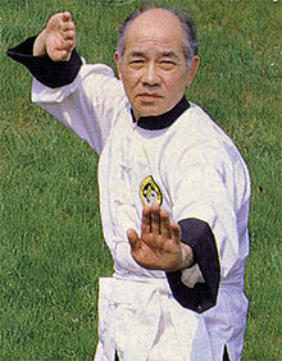
Lee Style Tai Chi, or the Lee Family Taoist Arts as it is also called is unusual in that it has developed and gained popularity in Britain and spread to other parts of the world from there. The popularity of the arts is down to one individual – Chee Soo. Chee Soo taught these arts for over 40 years until he died in 1994. All the evidence we have for the history of the arts comes from what Chee Soo said about them during his lifetime and what he wrote about them in his own books.
Chee Soo reports that he learnt the arts from a Chinese businessman, Chan Kam Lee who he met in London in 1934. Chan Lee was the last member of his own family to still practice the Lee Family Taoist Arts and over the next five years he taught Chee Soo as part of a small class he ran for friends. During the second world war Chee Soo fought with distinction, was a Japanese prisoner of war, and later escaped finding his own way back to allied lines.
Following the war Chee Soo continued to learn and acquire martial arts skills, adding judo and Aikido to the arts he had studied. He reports he also managed to make contact with Chan Lee and continue to train with him. Chan kam Lee was a trader in precious and semi precious stones and travelled between China and Europe as part of his business. In the winter of 1953/1954 the ship on which he was sailing was lost in a storm in the South China sea.
According to the account in Chee Soo’s books, Chee Soo established his first class in Manor Road School, West Ham in 1950. His daughter Lavinia dates the start of this class as 1947 in her account of her father’s life, and also reports the existence of an agreement between Chee Soo and Chan Lee that Chee Soo would not teach the Chinese arts until ten years had passed. During the 1950’s Chee Soo became a successful instructor in Aikido and built up a number of classes and clubs in this art. At the end of the agreed period in 1958, Chee Soo decided to switch from Aikido to teach the Lee Family Taoist Arts. From this point forward he only taught the Chinese arts he had learnt from Chan Lee. There are slightly different accounts of the arts Chee Soo taught. The following list is agreed by most sources:
+ Feng Shou Kung Fu (Hand of the Wind Kung Fu)
+ Ch’i Shu The art of locking and throwing, similar to Aikido
+ Chiao Li Chinese Wrestling
+ Wu Chi weapons training including; sabre, spear and staff
+ Kai Men, a range of exercises similar to Yoga
+ Tao Yin, respiration therapy exercises
+ T’ai Chi Ch’uan, including;
+ T’ai Chi Ch’uan, a 140 move form
+ Flying Hands (also called the dance) a 184 move form
+ T’ai Chi Stick, a 270 move form
+ T’ai Chi Sword, a 216 move form
+ T’ai Chi Fan, a 124 move form
+ T’ai Chi Silk, a 156 move form
Chee Soo also taught I Fu Shou (sticky hands), Lun Shou (whirling hands), Lun Pei
(whirling arms) and Mo Kun (the Taoist Wand). Chee Soo taught and practiced a range of other health arts including, Anmo and T’uina (massage), Tien Chen (acupressure), Mo Hsiang (meditation), Chen Tuan (Chinese Diagnosis) and Ch’ili Nung (The way of occlusion). He was famous for his advocacy of the Ch’ang Ming diet. Chee Soo describes all the arts he taught as “Taoist”. He says that they were handed down through the Lee family who were Taoists and that this origin is the source of their ancient lineage.
An excellent fuller biography of Chee Soo’s life and teaching career is now available on the Chee Soo wikipedia page.
 Lee Style T'ai Chi Website